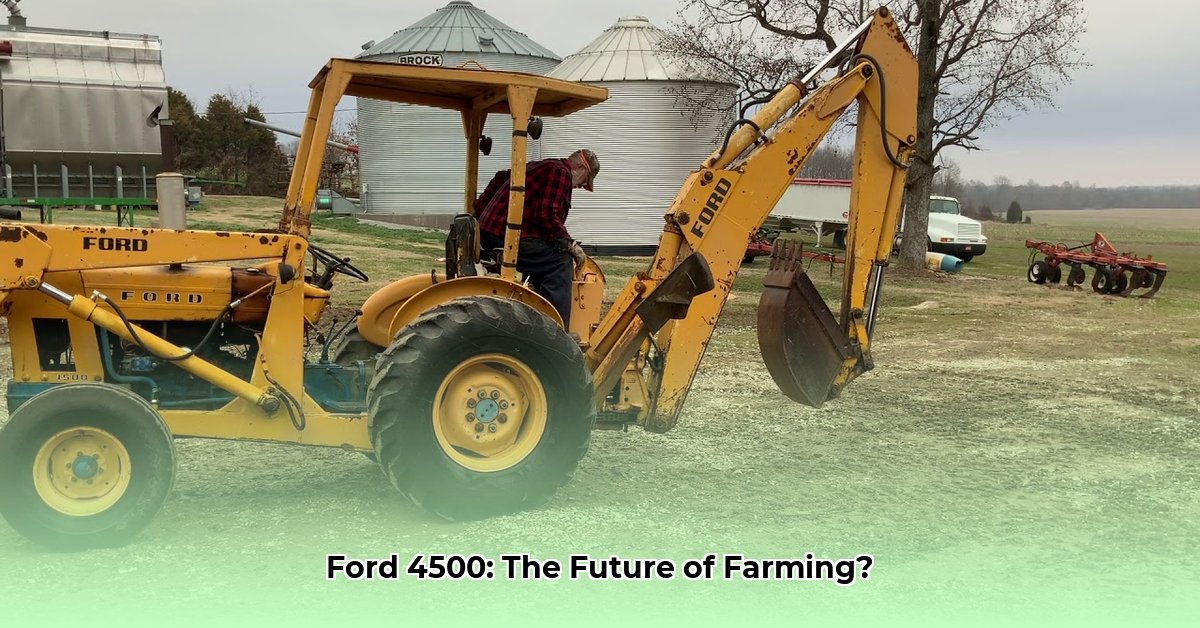
The Ford 4500: A Blast from the Past in a Modern World
The Ford 4500, a workhorse of farms from 1965 to 1975, presents a compelling case study in sustainable agriculture. Its robust build and simple mechanics offer unique advantages, but its age also presents challenges. Can this vintage tractor truly contribute to modern sustainable farming? For more information on similar models, check out the Ford 3550 specs.
One significant hurdle is fuel efficiency. Compared to modern tractors, the Ford 4500 consumes considerably more fuel. This translates directly to higher operational costs and a larger carbon footprint, potentially undermining the sustainability goals of many farmers. How can we reconcile this high fuel consumption with modern concerns about environmental impact?
Furthermore, the Ford 4500 lacks the advanced technological features of contemporary tractors. Precision agriculture relies heavily on GPS-guided planting and fertilizing, automated steering, and data-driven decision-making. These technologies minimize resource waste and optimize yields, aspects crucial for sustainable farming. Can a lack of these features be overcome?
The Ford 4500's Unexpected Strengths: Simplicity and Durability
Despite its fuel inefficiency and lack of modern technology, the Ford 4500 possesses unexpected strengths. Its straightforward mechanical design simplifies maintenance and repair, a significant benefit for smaller, organic farms with limited budgets. For example, being able to diagnose and repair issues yourself can save considerable time and money, enhancing both sustainability and economic resilience.
The tractor's durable construction also contributes to its longevity. A well-maintained Ford 4500, with proper care, can offer many years of service. This resilience contrasts sharply with some modern tractors, which may require more frequent, expensive repairs. This longevity translates into lower long-term ownership costs, potentially offsetting the higher fuel consumption, depending on the repair needs. Is the long-term cost-effectiveness of the 4500 a viable argument for its use?
Weighing the Pros and Cons: Is the Ford 4500 Right for You?
Before investing in a Ford 4500, careful consideration of several factors is essential:
Parts Availability: Securing replacement parts for a vintage tractor can prove challenging. Thoroughly research potential suppliers before purchase.
Mechanical Expertise: Are you or your team equipped to handle significant mechanical repairs? The Ford 4500 requires a high level of hands-on mechanical aptitude.
Fuel Efficiency: Accept the reality of higher fuel costs. This tractor may be unsuitable for large-scale operations due to fuel consumption.
Farm Size and Requirements: Assess power requirements. The Ford 4500’s power output is best suited for smaller farms or for specific tasks. Does its horsepower match your operational needs?
A Balanced Assessment:
| Advantages | Disadvantages |
|---|---|
| Simple, easily understood mechanics | High fuel consumption, potentially harming sustainability |
| Potentially lower initial purchase cost | Lack of advanced technologies (GPS, auto-steering) |
| Durable, long-lasting construction | Difficulty finding replacement parts |
| Rewarding hands-on maintenance | Demands significant mechanical expertise |
The Ford 4500's Place in Sustainable Agriculture: A Case-by-Case Decision
The Ford 4500 isn't a universal solution for sustainable farming. For small, organic farms prioritizing simplicity, affordability, and hands-on maintenance, it potentially offers a viable option. Larger farms or those prioritizing technology-driven efficiency may find its limitations outweigh the advantages. Sustainability here considers more than fuel efficiency: resource management, equipment longevity, and overall farm management strategy are key elements. The Ford 4500 offers a unique approach to these goals. Does this unique approach align with your farm's sustainability strategy?
Restoring a Ford 4500 Tractor for Sustainable Farming
Reviving a Ford 4500 isn't a simple task. Low compression, often well below factory specifications (420-510 PSI, often registering 175-225 PSI), signifies potential issues with pistons, valves, cylinder head, or head gasket. Careful diagnosis is crucial.
Several components are prone to failure: piston rings, valves, head gasket and fuel injectors. Each requires detailed attention for successful restoration.
The Restoration Process: A Step-by-Step Guide
Complete Engine Disassembly: Allows thorough inspection of every component.
Cylinder and Head Inspection: Examine cylinders for scoring; check piston rings for wear; inspect the cylinder head for cracks or warping.
Valve Train Overhaul: Address any valve spring issues; correct valve lash for optimal combustion.
Injector Replacement (if needed): Leak-down tests identify faulty injectors, boosting fuel efficiency.
Head Machining (if necessary): Professional machining ensures a proper seal.
Head Gasket Replacement: Essential for preventing leaks and ensuring proper combustion.
Engine Reassembly and Break-in: Meticulous reassembly and a proper break-in period are vital.
Compression Test: Verify that repairs have restored compression to specifications.
Long-Term Maintenance: The Key to Sustainable Success
Regular maintenance is crucial for maximizing the Ford 4500's lifespan and minimizing its environmental impact. This approach supports sustainable farming practices by ensuring efficient and reliable operation thereby reducing downtime and further emissions. Preventative maintenance is an investment in the long-term sustainability of your operation.